The handoff from formula to batch
A solved formula is not production until it becomes a controlled batch. The handoff should preserve the formula version, target quantity, ingredient assumptions, production line, schedule, and any operational notes needed by the team executing the work. The mechanics of that handoff are covered in how feed formulation connects to production.
Without that handoff, teams may produce from outdated formulas, miss substitutions, or lose the cost and nutrition assumptions behind the batch.
Planning around real constraints
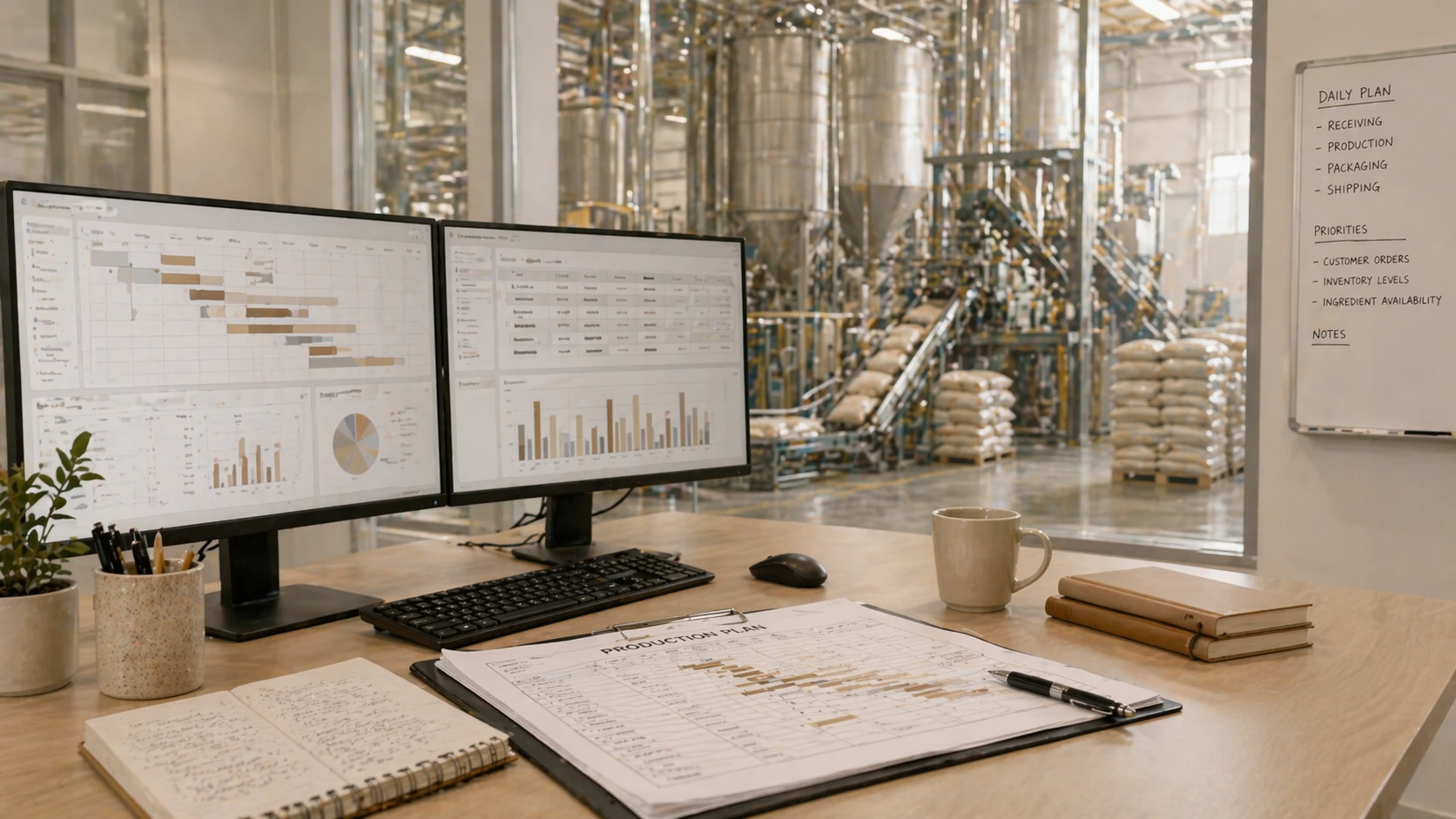
Production plans are shaped by line capacity, downtime, sequencing, ingredient availability, labor, packaging, and delivery commitments. A practical planning system needs to show these constraints together rather than treating production as a standalone calendar. Smaller operations face the same constraints at lower volume, as we discuss in feed formulation software for small feed mills.
Why downstream context matters
Distribution pressure can change production priority. A customer order, route plan, or finished-goods shortage may require a different schedule than a formula-only view would suggest. Production planning is strongest when it knows what needs to ship and when.
Closing the loop
Once production is complete, the system should update consumed ingredients, finished-goods stock, batch history, quality status, and traceability. That closed loop creates better costing, better records, and fewer manual corrections.